MARMARIS GUIDE
Driving in Turkey 2026: Speed Limits, Fines, Tolls and Marmaris Tips
Last updated: 4 November 2026
Share this guide
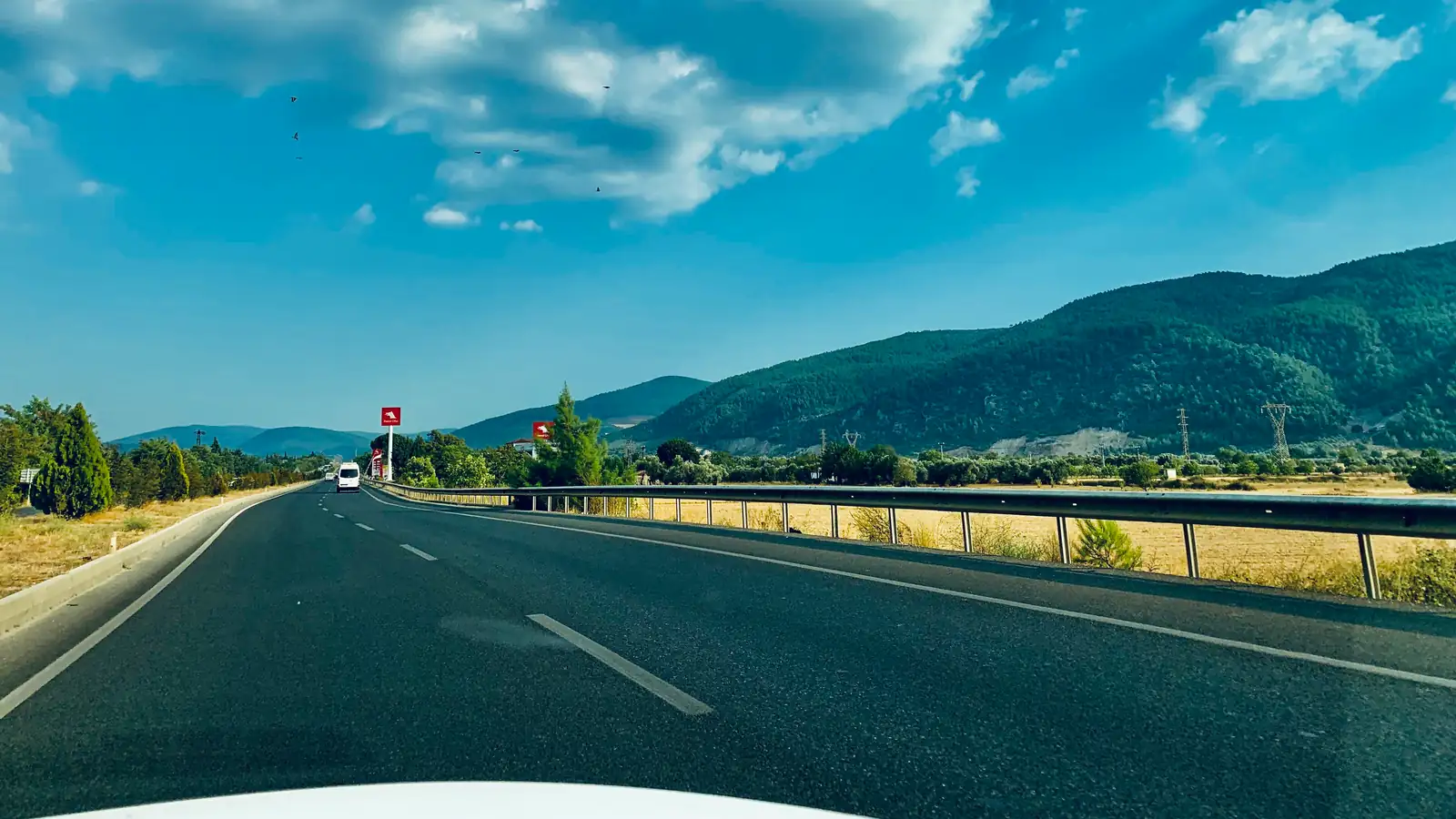
In Turkey you drive on the right, roads are generally good and there are no toll roads around Marmaris. But Law 7574, in force since 27 February 2026, changed the fines for speeding, alcohol, phones and seat belts, and Muğla province now runs average-speed checks on the Marmaris–İçmeler road and the Sakar Pass. In this guide you will find the current speed limits, the new rules, who gets the fine on a hire car, tolls, fuel and parking, the roads around Marmaris and what to do after an accident.
At a glance: driving in Turkey
- Side of the road
- Right
- Speed (cars)
- Towns 50, outside towns 90, divided roads 110, motorways 130 km/h (140 on some motorways)
- Alcohol limit
- 0.50 per mille for private cars
- Phone
- Hands-free only
- Emergency number
- 112
- Toll gates around Marmaris
- None; the Göcek Tunnel on the Fethiye road is tolled
10 Basic Rules for Driving in Turkey
- Traffic drives on the right; you overtake on the left.
- Seat belts are compulsory in every seat; children travel in a child seat suited to their height and weight.
- You may not hold a phone while driving; only hands-free is allowed.
- The alcohol limit for private cars is 0.50 per mille; the safest choice is not to drink at all before driving.
- Speed limits for cars are 50 km/h in towns, 90 km/h outside towns, 110 km/h on divided roads and 130 km/h on motorways; road signs always take priority.
- Vehicles already inside a roundabout have priority; follow the "Yol Ver" (give way) sign at the entry.
- At a red light you may turn only if there is a green arrow or a "right turn permitted" sign.
- Keep your licence, passport and rental agreement in the car; the rental company supplies the registration document.
- In an accident, safety comes first; if anyone is injured call 112 and do not leave the scene.
- Traffic fines and toll charges incurred during the rental are paid by the renter.
We check everything together at handover
Pick up the car free of charge in Marmaris centre, at your hotel or in İçmeler. Choose your dates and see the price straight away.
Turkey Speed Limits 2026
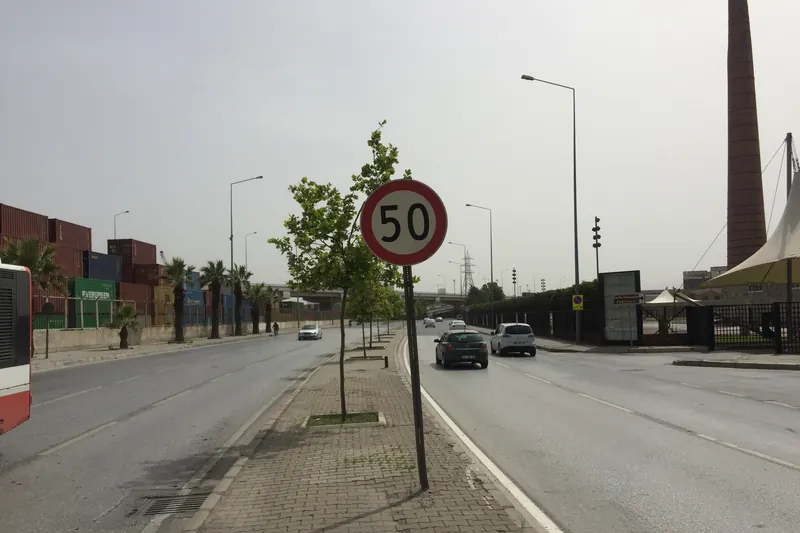
According to the General Directorate of Highways (KGM), these are the maximum speeds for cars (M1). If a sign shows a different limit, follow the sign; limits drop near schools, roadworks and bends.
| Road type | Limit for cars |
|---|---|
| Inside towns and villages | 50 km/h |
| Outside towns, two-way road | 90 km/h |
| Divided road (dual carriageway) | 110 km/h |
| Motorway | 130 km/h |
| Some motorways (signposted) | 140 km/h |
Since Law 7574, speeding fines are no longer based on a percentage but on how far you exceed the limit: inside towns fines start from 6 km/h over the limit, outside towns from 11 km/h over, and the top bands also suspend the licence for a time. In short, even slightly over the limit can mean a fine.
What Changed in 2026: New Rules and Fines (Law 7574)
Law 7574 was published in the Official Gazette on 27 February 2026, came into force the same day and raised many penalties in the Highway Traffic Law. Amounts are updated often, so we do not print them here; what matters is which behaviour now has heavier consequences.
- Speeding: fines start from fixed km/h thresholds; in the highest bands the licence is suspended for 30, 60 or 90 days.
- Alcohol: the limit for private cars is still 0.50 per mille, but the fines have gone up and grow with repeat offences; the 6-month licence suspension for a first offence still applies. Refusing a test is punished at the highest level.
- Phone: the fine for holding a phone has gone up; from the third offence in a year the licence is suspended for 30 days.
- Seat belts: not wearing one is fined, and a driver carrying a child without a suitable child seat is fined separately.
- Red lights: fines multiply with repeat offences and the licence can be suspended.
- Leaving the scene of an accident with injuries or deaths: now also punishable by prison.
- Aggressive driving: following another car, blocking the road and racing are new, heavily penalised offences.
Licence, Documents and Police Checks
- You can drive with a foreign licence for up to 6 months from your entry to Turkey.
- Some licences need an International Driving Permit (IDP) or a notarised translation; for details see our international driving permit guide.
- Keep your licence, passport or ID and rental agreement in the car; the registration document and the compulsory equipment (2 warning triangles, first-aid kit, fire extinguisher) are already in all our cars.
- Police and gendarmerie may hold roadside checks; approach slowly, follow the officer's instructions and show your documents.
- Radar detectors are banned.
Junctions, Traffic Lights and Things Unique to Turkey
- Modern roundabouts: the vehicle inside has priority and there is a "Yol Ver" (give way) sign at the entry. According to the Highways Directorate, at junctions with a central island where the main road carries straight on, traffic from the side road must stop and give way; watch the signs.
- Red lights: without a green arrow or a "right turn permitted" sign, you may not turn right on red.
- Dolmuş minibuses and shuttles: they can stop anywhere to pick up passengers; keep your distance behind them.
- Horn and headlight flashing: drivers use them often, usually to mean "I'm here" or "I'm coming through"; stay calm.
- Motorbikes, scooters and ATVs: their numbers rise in resort areas in summer; check your mirrors often.
Tolls and HGS: Are There Toll Gates Around Marmaris?
In Turkey, tolls on motorways, bridges and some tunnels are mostly collected automatically with HGS. There are no toll gates on the roads from Marmaris to Muğla, Dalaman, Bodrum and Datça.
- Fethiye and Ölüdeniz road: the Göcek Tunnel between Dalaman and Göcek is tolled.
- İzmir road: the İzmir–Aydın motorway is tolled.
- Tolls incurred during the rental are paid by the renter and may be passed on later with documents. All our cars have HGS, so the toll is charged automatically at the gate; you do not need to stop or pay cash.
- Tolls not paid on time attract an extra penalty, so simply tell us if you used a toll road.
Fuel: Attendants, Fuel Types and Payment
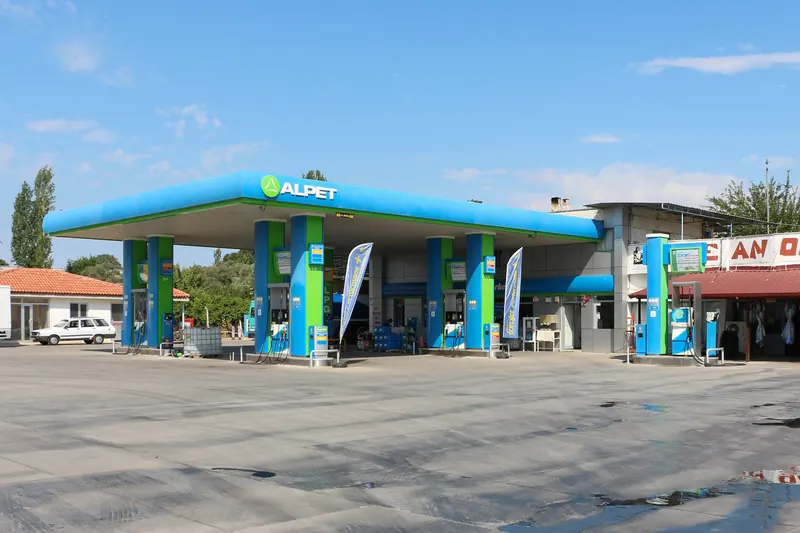
- At most stations an attendant fills the car; tell them the fuel type (petrol or diesel). "Fulle" means fill it up.
- Petrol is sold as "kurşunsuz 95" (unleaded 95) and diesel as "motorin"; check the correct type on the label by the fuel cap.
- Card payment is common; carry a little cash in small villages.
- Fill up in Marmaris before heading to Bozburun, Söğüt or Datça.
- Return the car at about the fuel level you received it; the level is recorded at handover.
Parking in Marmaris and İçmeler
- Parking in Marmaris centre and along the seafront is mostly paid; on summer evenings spaces are hard to find.
- Cars blocking the road or entrances can be towed; do not park on yellow lines or where a no-parking sign stands.
- Unpaid parking charges and fines are linked to the number plate and passed on to the renter later.
- Ask your hotel about parking in advance; if you stay in the centre, leaving the car in a car park and walking is often easiest.
Roads Around Marmaris
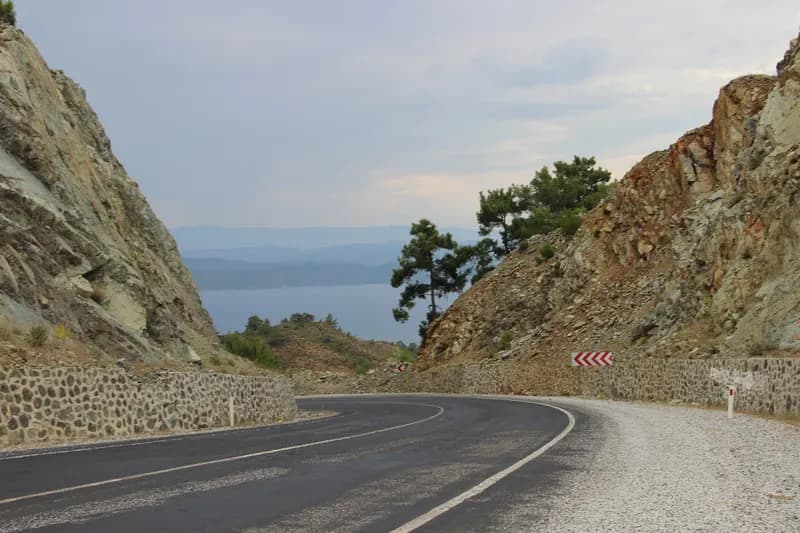
The roads around Marmaris are paved, but many are winding. What to watch on the most used ones:
| Road | What it is like | Tip |
|---|---|---|
| Marmaris–İçmeler | Busy in summer, many pedestrians and scooters | Average-speed checks |
| Sakar Pass (to Muğla, Bodrum, İzmir) | Long, winding climb | Average-speed checks; overtake lorries safely |
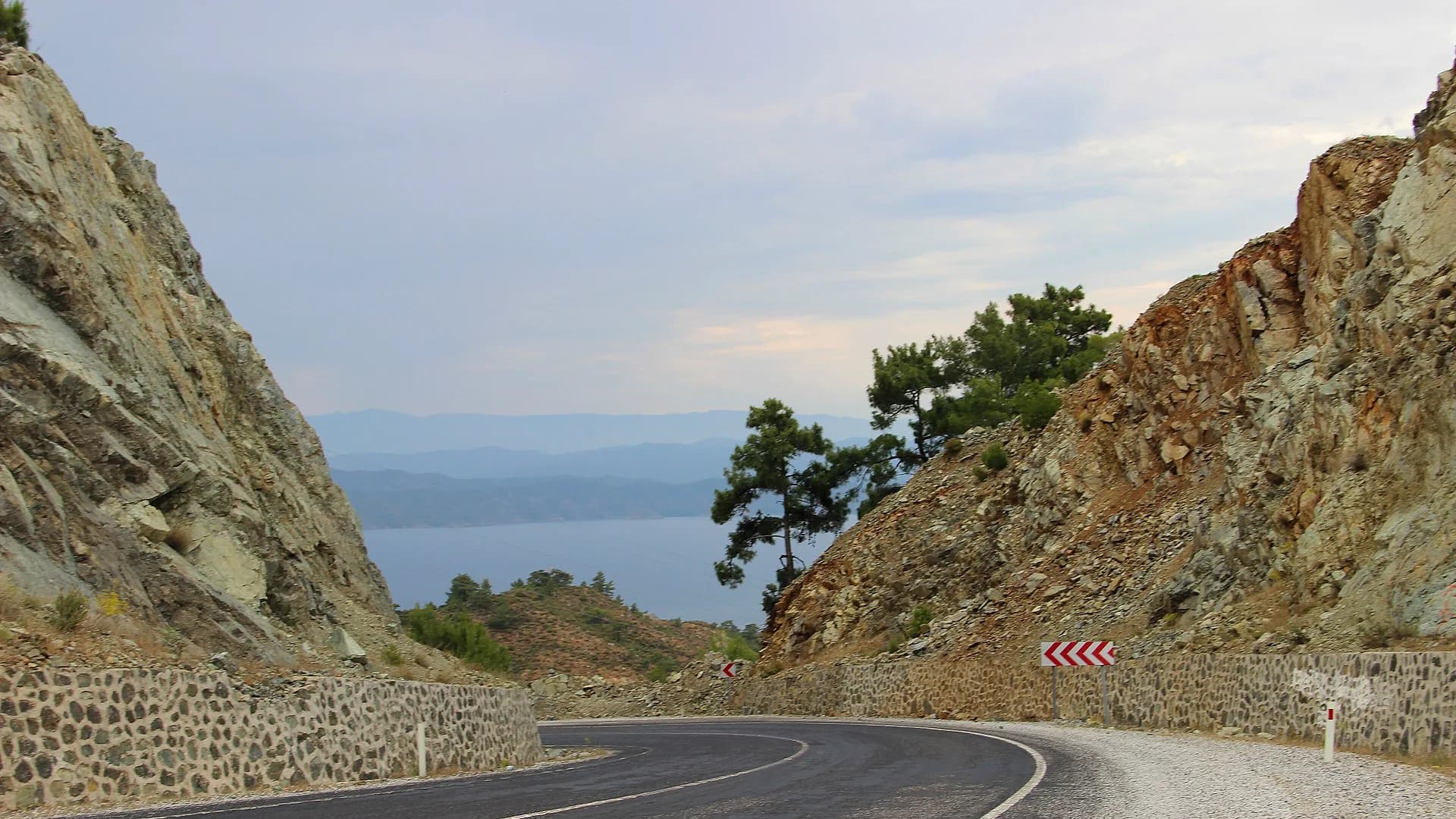
| Marmaris–Datça (D400) | Winding, narrow in places | Plan the return in daylight |
| Bozburun peninsula | Narrow, winding village roads | Add time to the map estimate |
| İçmeler–Turunç | Steep with sharp bends | Come down slowly in a low gear |
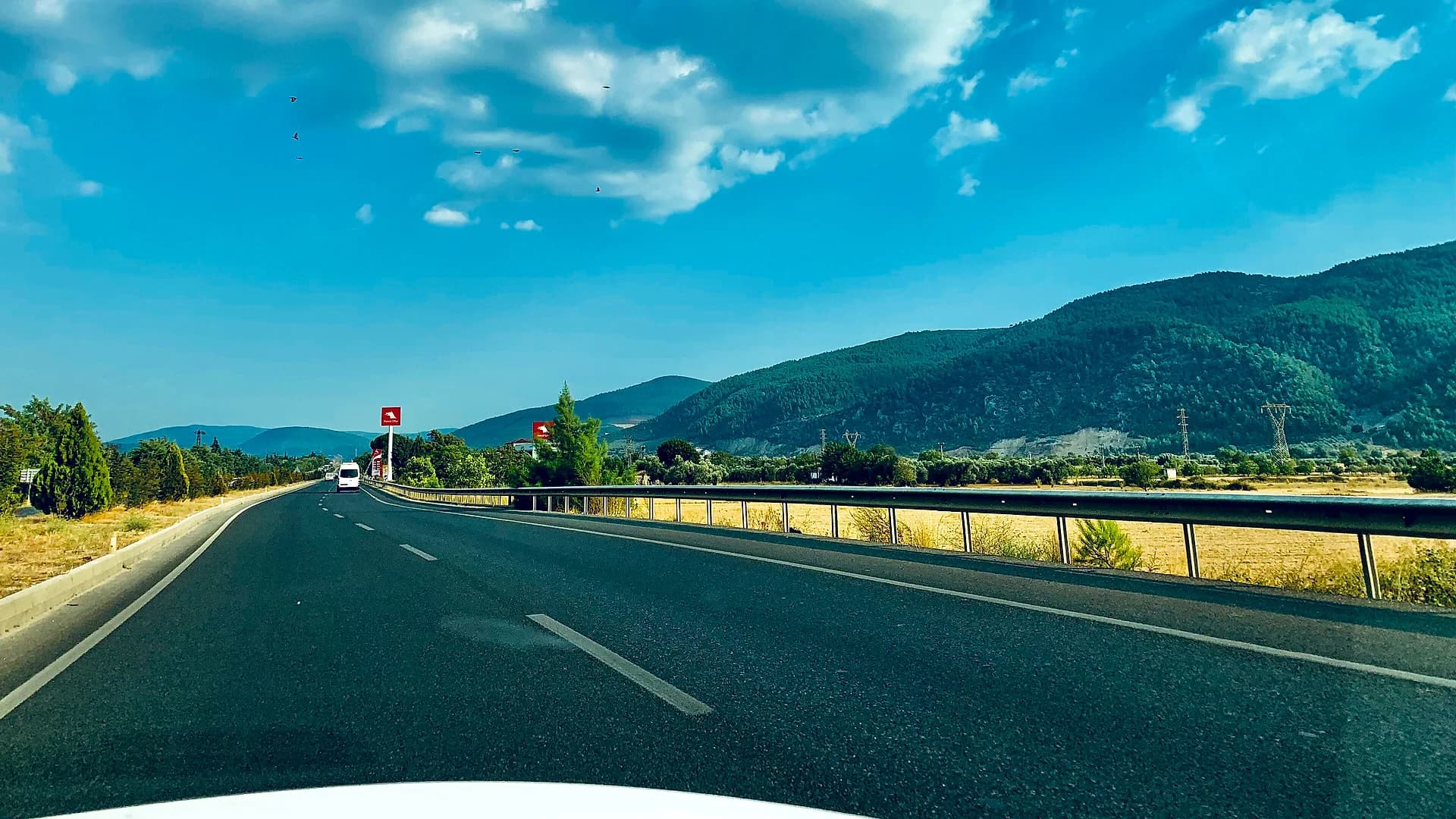
| Marmaris–Dalaman (D400) | Wide and easy | The Göcek Tunnel towards Fethiye is tolled |
For details of these roads see our Bozburun peninsula and Datça guides.
What to Do After an Accident or Breakdown
- If possible, move the car to a safe place, switch on the hazard lights and put out the warning triangles.
- If anyone is injured or there is danger, call 112 and do not leave the scene until the police or gendarmerie arrive.
- If there is only material damage, the drivers can fill in an agreed accident report; it can also be done with a mobile app.
- With a hire car, call us as soon as possible; we will guide you through the report and procedure.
- Photograph the cars, number plates and road; do not take the car to a garage yourself.
For insurance, CDW and excess details see our Marmaris car rental tips guide.
Practical Tips for Relaxed Driving in Turkey
Hire a Car in Marmaris
You can pick up the car free of charge in Marmaris centre, at your hotel or in İçmeler; the fee for other points is shown on the booking screen. See our delivery points page for all points.
For the 300 km daily limit, licence, deposit, tolls and traffic fines see our rental terms. To see prices in advance, our Marmaris car hire prices guide shows the current table.
Distances and times are approximate and vary with traffic and season.
Share this guide
Frequently asked questions
What are the speed limits in Turkey?
For cars: 50 km/h in towns, 90 km/h on two-way roads outside towns, 110 km/h on divided roads and 130 km/h on motorways; some motorways are signposted at 140 km/h.
Is there a speed tolerance in Turkey?
Since Law 7574 fines no longer start at a percentage but at a fixed amount over the limit: 6 km/h over in towns and 11 km/h over outside towns.
What is the drink-drive limit in Turkey?
0.50 per mille for drivers of private cars. Even a first offence means a 6-month licence suspension; the safest choice is not to drink at all.
Who pays traffic fines on a hire car?
The renter. Since the 2026 change, a fine can be issued directly in the renter's name when they are identified from the rental record; fines that reach us later are also passed on to the renter.
Are there toll roads around Marmaris?
There are no toll gates on the roads from Marmaris to Muğla, Dalaman, Bodrum and Datça. The Göcek Tunnel on the Fethiye road and the İzmir–Aydın motorway are tolled.
What is HGS and how do I pay tolls in a hire car?
HGS is the system that charges tolls automatically on motorways and tunnels. Tolls incurred during the rental are paid by the renter and may be passed on later. All our cars have HGS.
How long can I drive in Turkey with a foreign licence?
Up to 6 months from your entry to Turkey. Some licences need an International Driving Permit or a notarised translation.
Can you turn right on red in Turkey?
No. Without a green arrow or a "right turn permitted" sign you may not turn right at a red light.
Who has priority at a roundabout in Turkey?
At a modern roundabout the vehicle inside has priority and there is a "Yol Ver" sign at the entry. At junctions where the main road carries straight on, traffic from the side road gives way; follow the signs.
What should I do after an accident in Turkey?
Make the scene safe; if anyone is injured call 112 and do not leave. With material damage only, an agreed accident report can be filled in. With a hire car, call us straight away.
Is it hard to drive in Marmaris?
No, the roads are paved. In summer the centre and the İçmeler road are busy, and the Datça and Bozburun roads are winding. There are average-speed checks on the Marmaris–İçmeler road and the Sakar Pass.
Can an unpaid traffic fine cause problems when entering Turkey?
It can. Since the 2026 change, unpaid traffic fines of foreign visitors are collected on their next entry; if unpaid, entry may be refused.