MARMARIS GUIDE
Marmaris Pine Honey: The Protected Honey, Harvest Calendar, Bayır Honey Village and How to Buy It
Last updated: 25 November 2026
Share this guide
Marmaris pine honey is not made from flowers but from the sweet secretion of a tiny insect that lives on pine trees, and since 2019 it has been a protected designation of origin. In this guide we cover the lab values in the registration document, the month the bees arrive in the pine forests, a drive to the honey village of Bayır, what to check on the label, why fake honey can't be spotted at home, and how to fly home with a jar.
Marmaris pine honey in brief
- Registration
- Designation of origin no. 469, 6 November 2019; registered by the Marmaris Chamber of Commerce
- Source
- The sweet secretion of the pine scale insect (Marchalina hellenica) living on red and Scots pine
- Harvest
- Mid-July to the end of October; 3 harvests in a good year
- What sets it apart
- Proline at least 500 mg/kg, electrical conductivity at least 1.09 mS/cm
- Honey village
- Bayır: 28–42 km, 43–58 minutes from Marmaris
- Taking it home
- Into the EU at most 2 kg per person; pack the jar in your suitcase
What is Marmaris pine honey? Pine, insect and bee
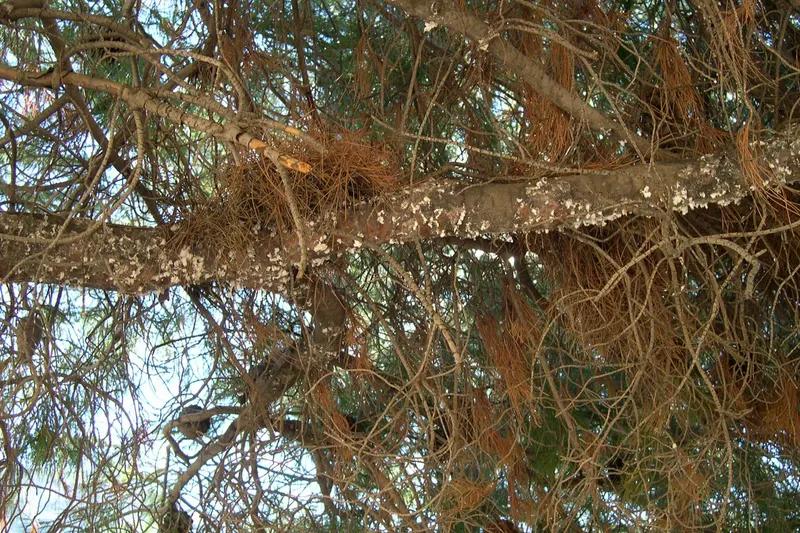
Pine honey is a honeydew honey. A scale insect called Marchalina hellenica, known locally as the basra bug, lives in the cracks of red pine and Scots pine bark. It sucks the tree's sap and releases the sugary liquid it cannot digest. Bees collect this liquid, work it with their own enzymes and turn it into honey. So pine honey holds no flower nectar: it holds the pine forest itself.
According to the industry, Turkey produces about 90–92% of the world's pine honey, and most of it comes from Muğla. Marmaris is one of the centres: of the district's 87,100 hectares, 82,557 hectares are forest. More than 1,200 mm of rain a year and a dry summer from May to September give the insect ideal conditions to multiply.
On a forest walk you can see it for yourself: the white, cotton-like tufts that sit like snow in the cracks of pine bark are the insect's waxy cover. Leave the tree alone; those white patches are the promise of this year's honey.
From 1840 to registration no. 469: what the document says
The first written record of honey in Marmaris dates from 1840. The Ottoman tax registers (temettuat) of 1840–1845 show that almost every household in Marmaris kept beehives.
The Marmaris Chamber of Commerce applied on 13 January 2017, and the Turkish Patent and Trademark Office registered "Marmaris Çam Balı" (Marmaris pine honey) as designation of origin no. 469 on 6 November 2019. A designation of origin is the strictest kind of geographical indication: it says the product owes all its qualities to that place. The boundary is the district of Marmaris.
The Chamber runs the inspections: a board of at least 3 people from the Chamber, the district agriculture and forestry directorate, the municipality and the district health directorate checks apiaries, harvests and packaging at least once a year. A curious detail: the first harvest is not inspected, because bees returning from the highlands still carry flower honey in their combs, so it comes out mixed. Inspection is done at the 2nd and 3rd harvests.
Recent years have been hard. According to the Chamber's chairman, after the 2020 heatwave and the 2021 wildfires Marmaris pine honey output fell from about 1,200 tonnes to 800, beekeepers from about 610 to 487 and hives from about 145,000 to 100,000. In 2026 the Chamber also applied for European Union registration.
The lab values that set Marmaris pine honey apart
The registration document sets limits for Marmaris pine honey. Only a laboratory can tell whether a jar meets them, but knowing the values helps you ask the label and the seller the right questions:
| Criterion | Marmaris pine honey | What it tells you |
|---|---|---|
| Electrical conductivity | At least 1.09 mS/cm | Shows the mineral content; the regulatory minimum for any pine honey is 0.8, and Marmaris honey is higher |
| Proline | At least 500 mg/kg | An amino acid that shows the bees' input; higher in Marmaris than in other pine honeys |
| Moisture | At most 18% | The more moisture, the more likely honey is to ferment and spoil |
| HMF | At most 40 mg/kg | Rises in heated or very old honey |
| Diastase number | At least 9 | A natural enzyme of honey; it drops when honey is overheated |
| Glucose + fructose | At least 45 g per 100 g | Lower than in flower honey, which is why pine honey is less sweet and does not burn the throat |
| Sucrose | At most 10 g per 100 g | Table sugar; more of it is a reason for suspicion |
| Naphthalene | At most 10 ppb | Residue limit |
The document describes the colour as generally dark, from reddish to dark brown depending on whether the year was dry or rainy; the taste as resinous and piney; and the texture as thick and slow-flowing. The main aroma compounds are nonanal at an average of 34% and nonanol at 19%, and the most common pollen comes from the heather family (Ericaceae).
Harvest calendar: when do the bees come to the pine forest?
| Period | What happens |
|---|---|
| November–January | Hives winter in Marmaris with a permit; real wintering starts when it drops below 14 °C. |
| 15 February – mid-May | Spring: bees gather pollen from Marmaris flowers and raise brood; some beekeepers move to other provinces for flowers. |
| Mid-July | The bees return to the pine forests; the insect's eggs hatch in the second half of July. |
| Second half of August | The insect population peaks and the pine honey flow gets strong. |
| August – end of October | In a good year there are 3 harvests; inspection takes place at the 2nd and 3rd. |
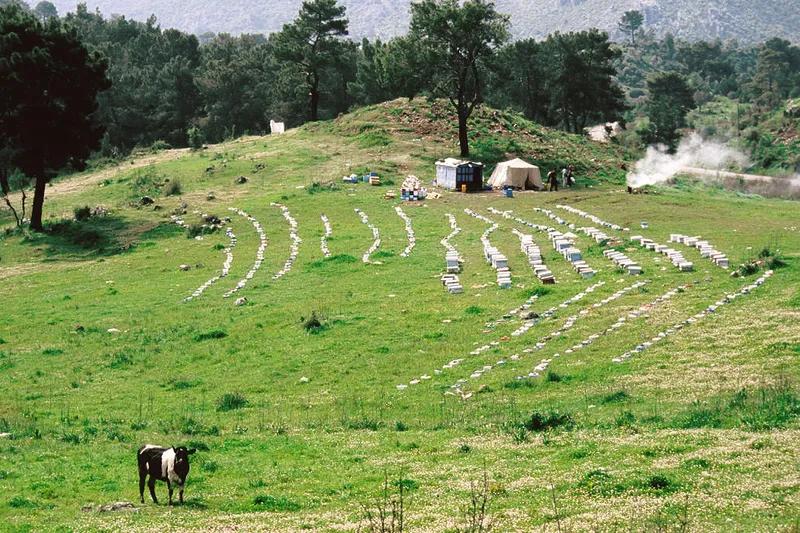
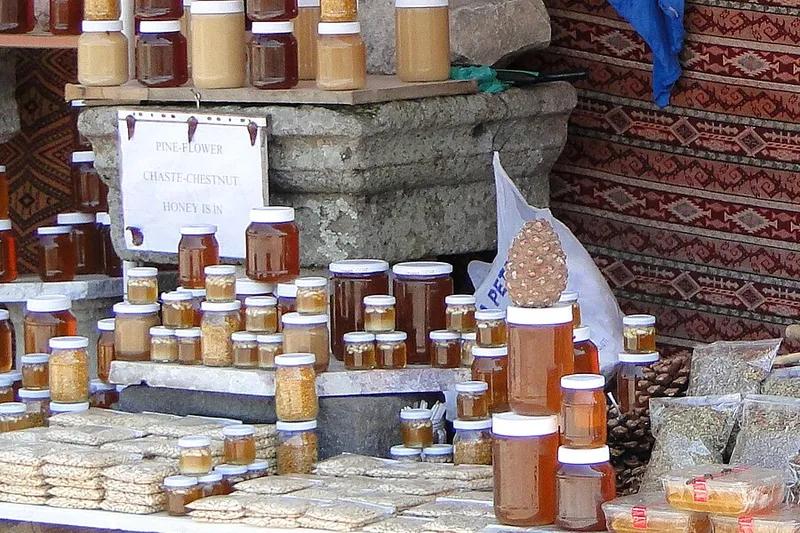
The harvest is done in the late afternoon, when all of the comb or at least 2/3 of it is capped with wax; capped comb shows the honey is ripe. The extracted honey rests in chrome tanks so pollen settles to the bottom and air bubbles rise to the top. If you visit Marmaris in autumn you will see rows of hives and beekeepers' tents along the forest roads: that sight means the honey season is on.
A half day by car to the honey village of Bayır
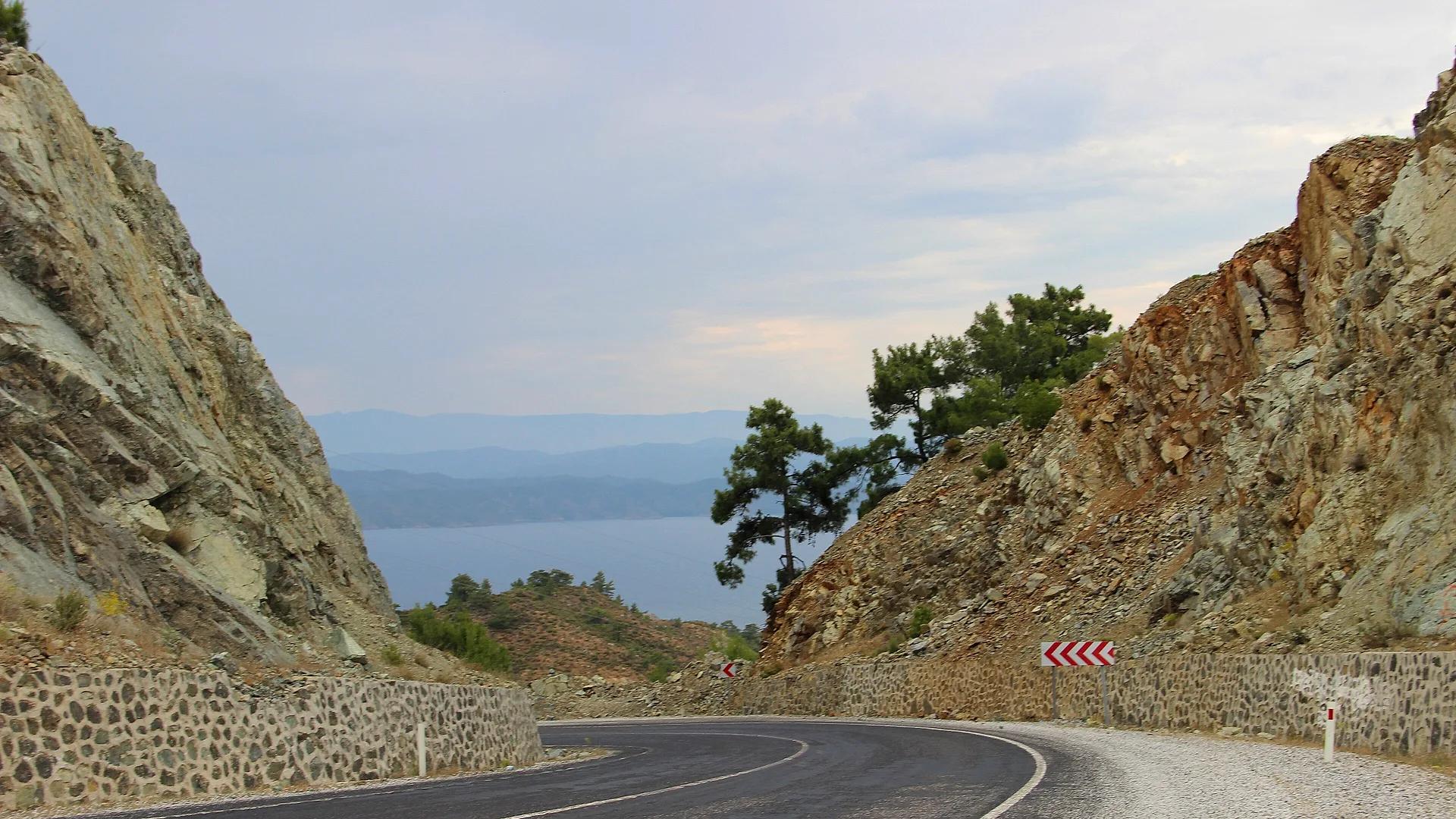
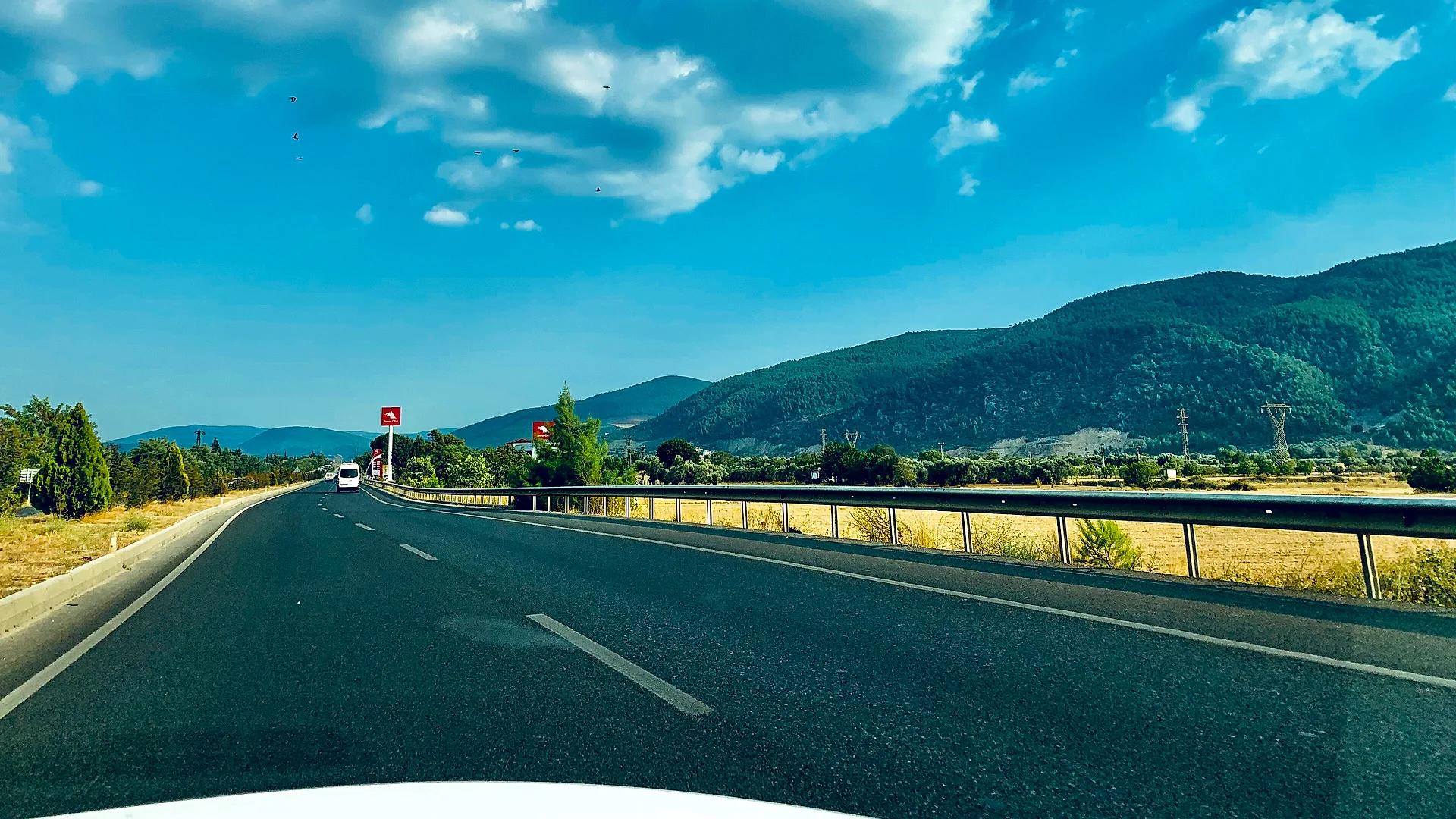
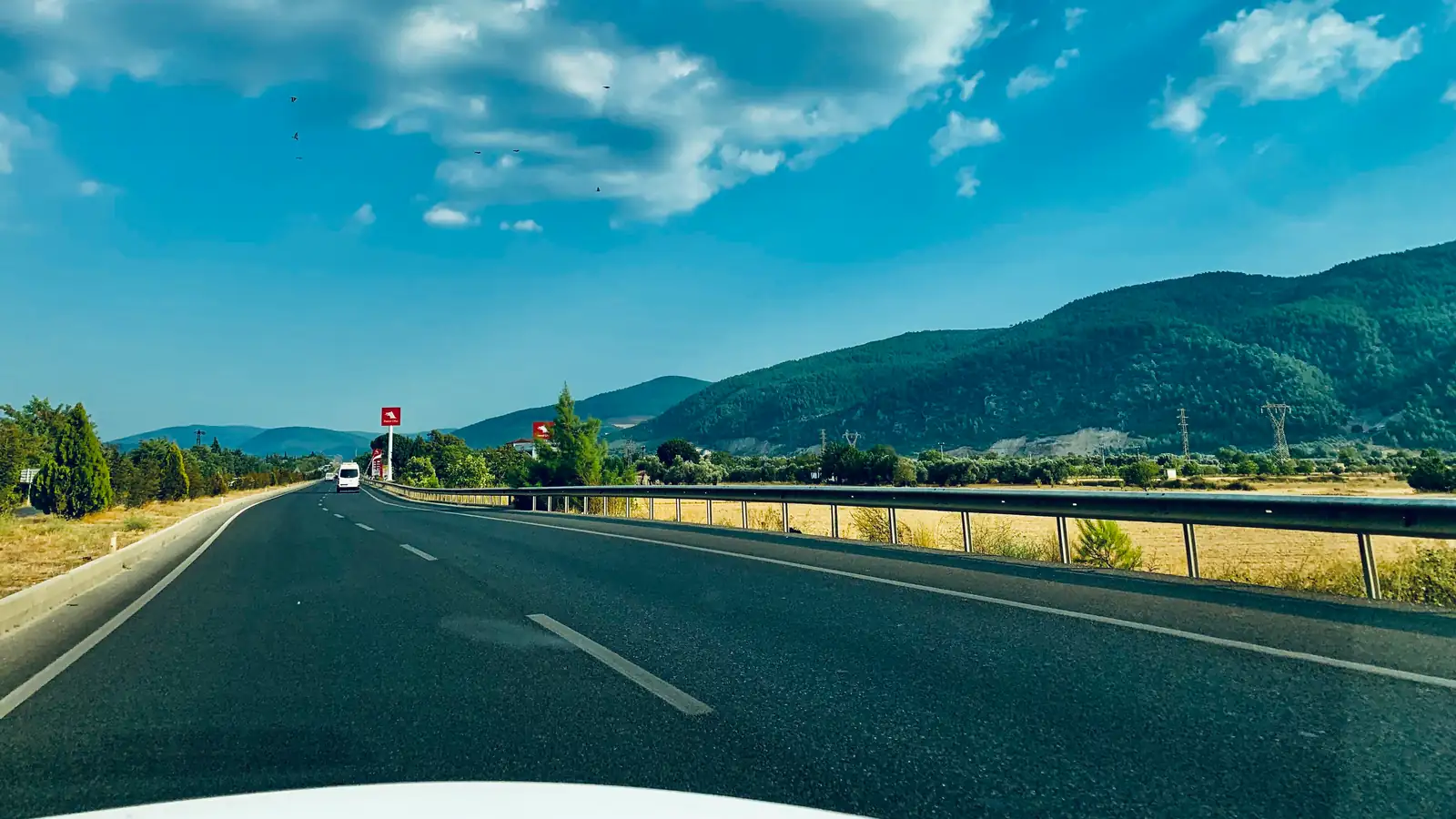
- The road: maps show 28–42 km and 43–58 minutes from Marmaris to Bayır; two mapping services choose different roads, so we give the range. Most of it is a winding mountain road.
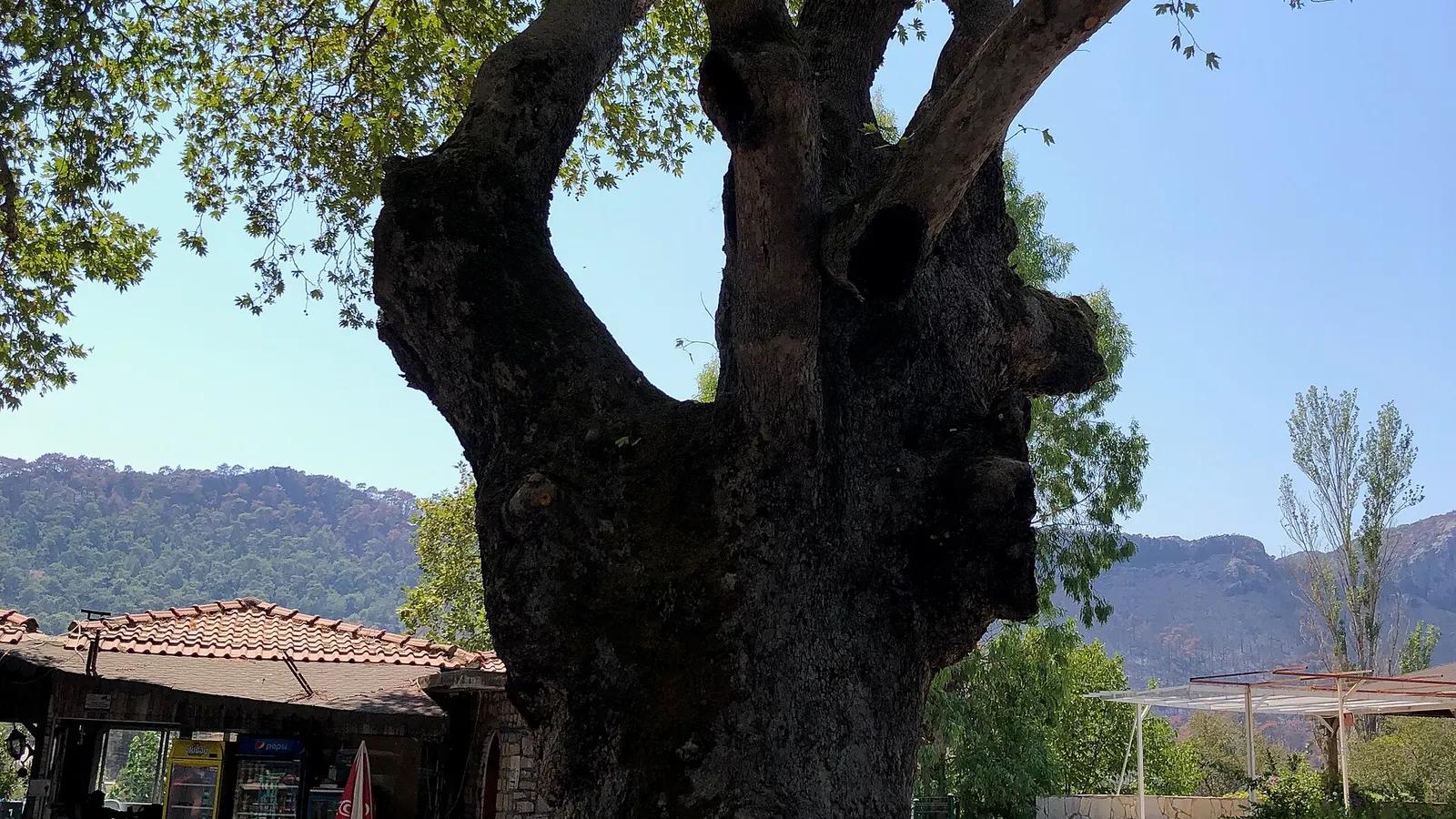
- The village: Bayır lives from beekeeping, bay leaves and thyme. The monumental plane tree in the village square is the symbol of the area; you will read different estimates of its age.
- Traces of fire: the 2021 wildfires also hit the pine honey forests around Bayır. You may see burnt slopes along the way; the Chamber's chairman puts the fall in output down to the 2020 heatwave and the 2021 fires.
- In season: between August and October there are hives along the road and in the forest. Don't walk up to them, and don't stop on a bend or in the middle of the road for a photo.
- Going on: from Bayır it is about 12 km to Selimiye and about 9 km to Turgut; to finish the day on the peninsula, see our Bozburun Peninsula guide.
What to check on the label when buying pine honey
- Logo: under the registration, the logo reading "Marmaris Çam Balı" and the designation-of-origin emblem must be on the product or its packaging, or clearly visible where it is sold.
- Name: the Turkish Food Codex Honey Communiqué (2020/7) defines pine honey as a honeydew honey; the label says "çam balı" (pine honey) and may also say "salgı balı" (honeydew honey).
- Type: extracted honey, comb honey (at least 80% of the comb must be capped) or wild comb honey from a traditional log hive (karakovan). Karakovan honey may not be extracted and sold as extracted honey.
- Colour and taste: dark, reddish or dark brown; resinous, piney and not very sweet. A very pale, very sweet honey that burns the throat does not fit the description of Marmaris pine honey.
- Crystallising: Marmaris pine honey stays liquid for a long time. But there is no rule that "honey that sets is fake" or "honey that never sets is fake"; flower honey crystallises naturally.
- Ask the seller: which year's harvest, which apiary, which harvest? Marmaris pine honey producers are registered with the Chamber of Commerce, so feel free to ask whether they are.
Fake honey: why home tests aren't enough
Dropping it in water, setting it alight with a match, smearing it on paper... News stories share recipes for these tests that say exactly the opposite of each other. A food engineer at Turkey's Ordu Beekeeping Research Institute says real and fake honey cannot be told apart by look or smell. Only lab analysis gives a definite answer, which is also why Muğla beekeepers protested in October 2026 against glucose-syrup honey sold as pine honey:
- The ministry list: Turkey's Ministry of Agriculture and Forestry publishes products proven to be imitated or adulterated, with brand and batch number, in its "Taklit veya Tağşiş Yapılan Gıdalar" list. Look up the brand there before you buy.
- Doubts and complaints: you can call the ALO 174 food line.
- Registered producer: choose a product with the logo, the producer's name and batch details, one that has been through inspection.
- The figures: the lab limits for Marmaris pine honey are in the table above; you can ask a seller who has an analysis report to show it.
Mad honey is not Marmaris honey
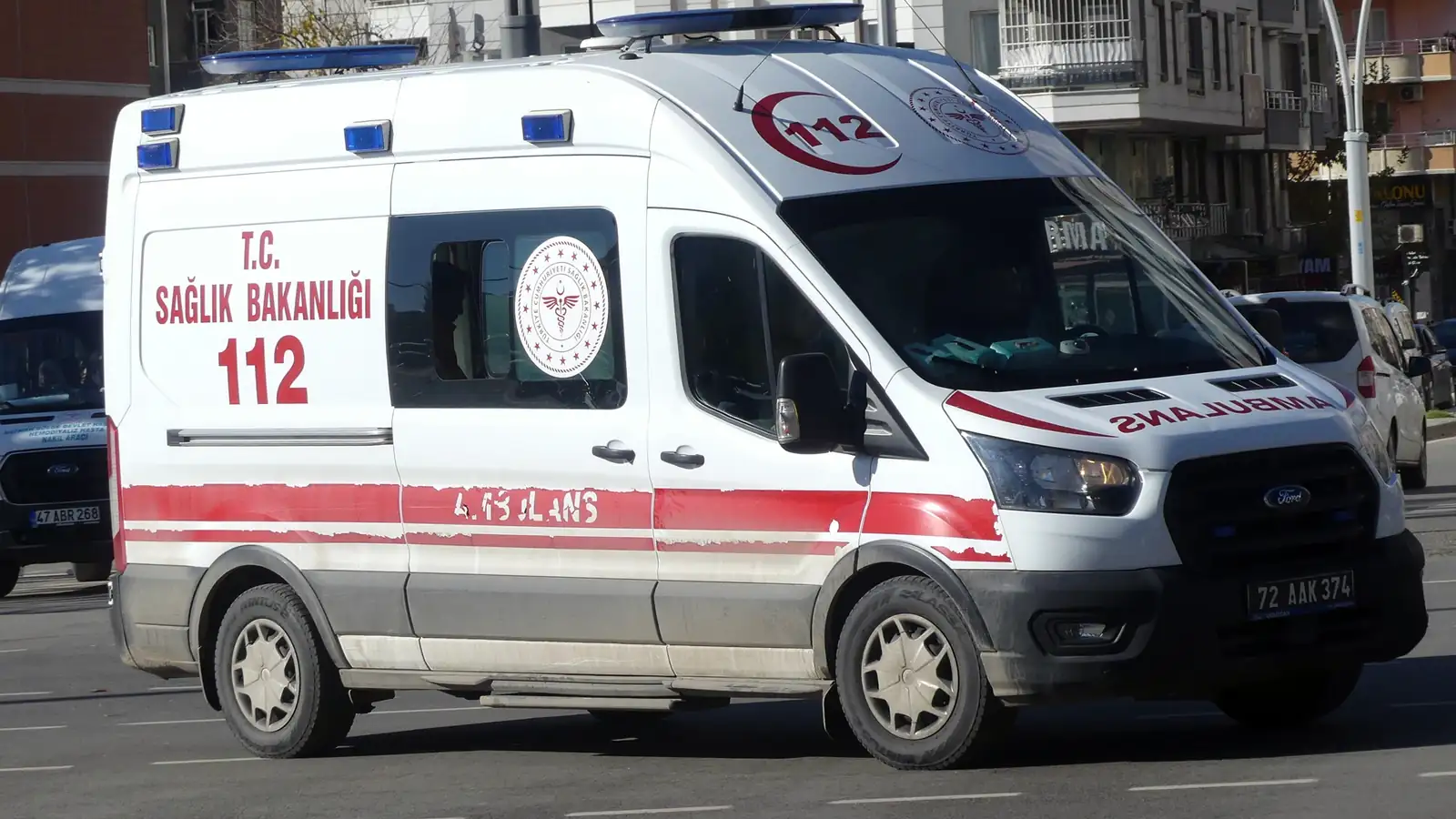
Mad honey, also sold online and in some shops as "deli bal", comes from rhododendron nectar in the mountains of the eastern Black Sea and contains grayanotoxin. Even a little more than a teaspoon can cause nausea, dizziness and a dangerously slow heartbeat within a few minutes to 3 hours. It has nothing to do with Marmaris pine honey. If someone feels unwell after eating mad honey, call 112 at once.
Taking honey home: suitcase, cabin and customs
- European Union: EU Regulation 2019/2122 lets travellers arriving from outside the EU carry honey (together with some other products in the same point) of at most 2 kg per person in their luggage.
- United Kingdom: official GOV.UK pages say different things; one allows 2 kg from outside the EU, while the travel leaflet bans honey from most non-EU countries. Check the current rule on GOV.UK before you fly.
- Other countries: every country has its own customs rules; check your country's customs website.
- Cabin: at security, honey counts as a liquid and falls under the liquid limit. Put the jar in your suitcase, tape the lid, bag it and pack it between clothes.
- Comb: comb honey breaks and leaks more easily; carry it in a hard box.
Tips for Marmaris in honey season
Car hire for the honey villages
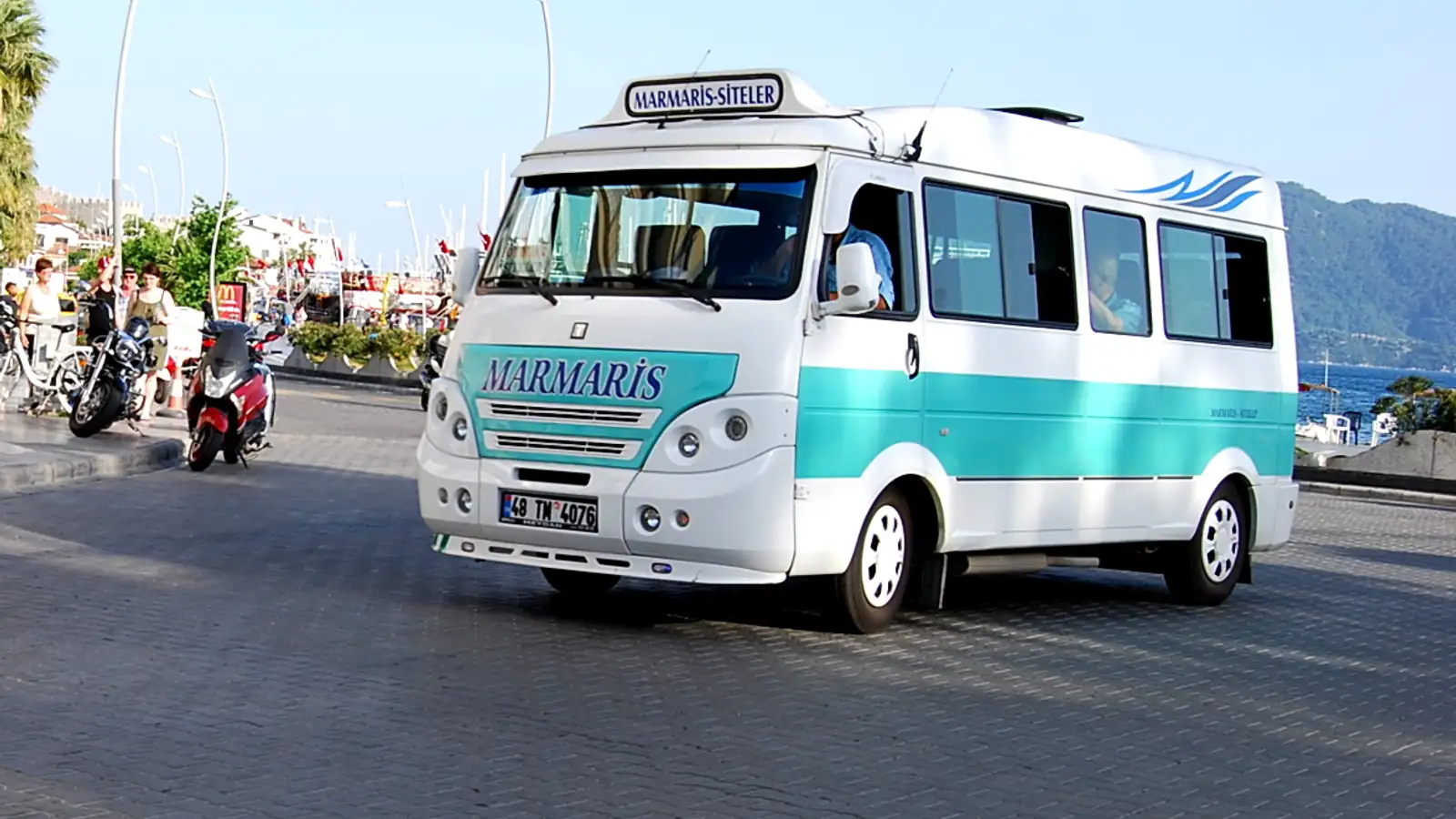
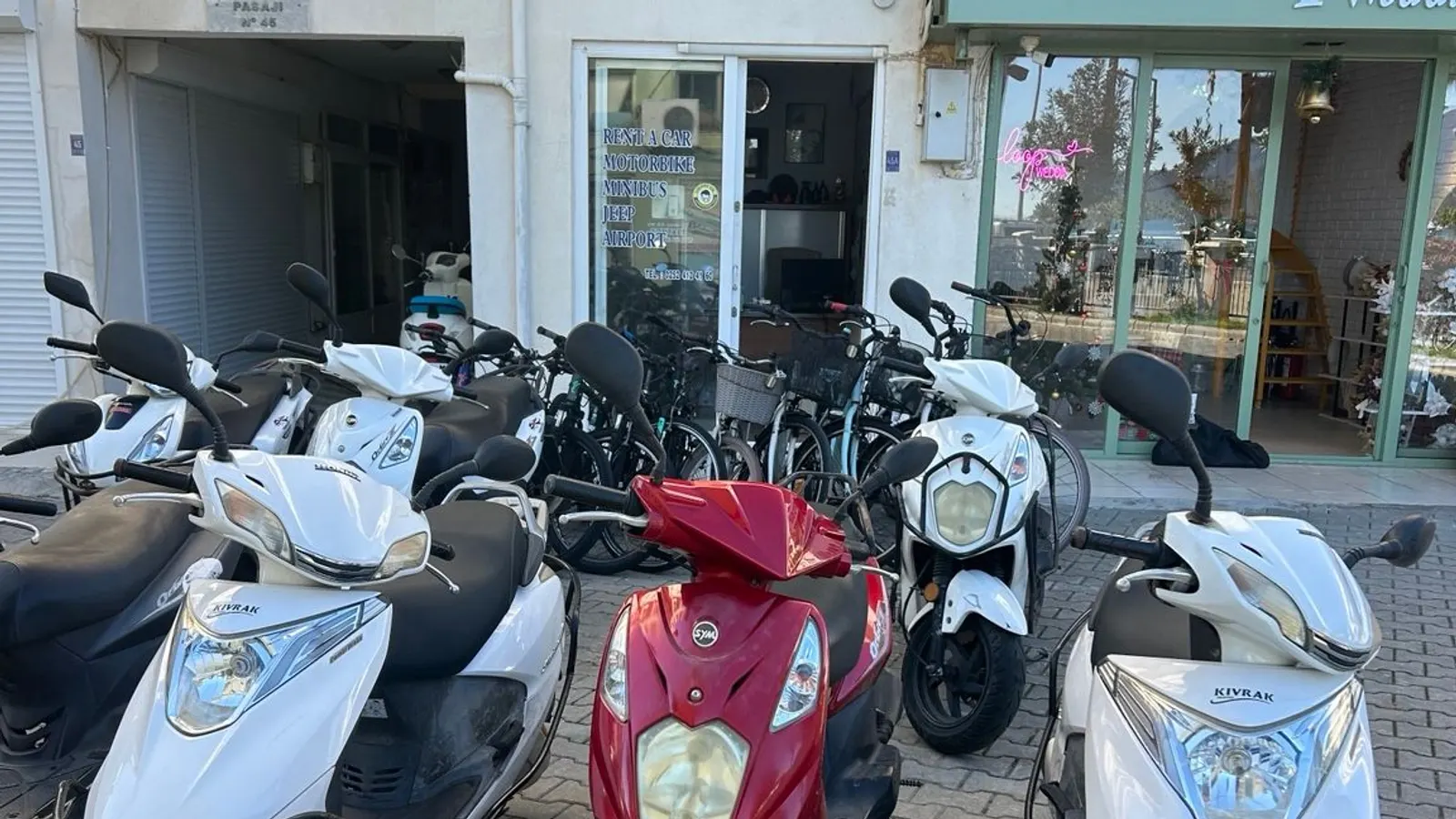
Minibus services to Bayır, Selimiye and Turgut may be limited; a car is the easiest way to go from village to village. We deliver free to Marmaris centre, the harbour, Netsel Marina and hotels in Marmaris and İçmeler (delivery points). No credit card is needed for the deposit (car hire without a credit card), and cancellation is free up to 24 hours before delivery. The daily mileage limit is 300 km. For a week's plan, see our Marmaris itinerary guide.
Choose your dates
Car delivery runs every day 08:00–00:00; for flights outside these hours, contact us in advance.
Distances and times are approximate and vary with traffic and season.
Share this guide
Frequently asked questions
What is Marmaris pine honey?
A honeydew honey made by bees from the sweet secretion of the pine scale insect (Marchalina hellenica) living on red and Scots pine. It is darker and less sweet than flower honey, with a resinous, piney taste.
Is Marmaris pine honey a protected product?
Yes. "Marmaris Çam Balı" was registered as designation of origin no. 469 on 6 November 2019, by the Marmaris Chamber of Commerce. The logo and the designation-of-origin emblem must be on the product or its packaging.
When is pine honey harvested?
The bees return to the pine forests in mid-July, and the insect population peaks in the second half of August. In a good year there are 3 harvests until the end of October.
Does pine honey stay liquid for a long time?
Yes; according to the registration document Marmaris pine honey keeps its texture for a long time without crystallising. It also has less glucose and fructose than flower honey. Crystallising on its own proves neither that a honey is fake nor that it is real.
How can you tell fake pine honey?
Home water and match tests are not reliable; only a lab gives a definite answer. Check the logo and the batch details, look up the brand on the Ministry of Agriculture and Forestry's imitation and adulteration list, and call ALO 174 if in doubt.
Can you take pine honey on a plane?
Yes, but in hand luggage it counts as a liquid, so pack it in your suitcase. You can take at most 2 kg of honey per person into the EU. For the UK and other countries, check their customs pages before you fly.
Where can you buy pine honey in Marmaris?
From sellers whose jars carry the logo and batch details, preferably a producer registered with the Marmaris Chamber of Commerce. If you'd like to see the honey village of Bayır, it is 43–58 minutes from Marmaris by car.
Is mad honey the same as pine honey?
No. Mad honey comes from rhododendron nectar in the eastern Black Sea region and can cause poisoning; it has nothing to do with Marmaris pine honey.